VFX Artist (Power Point Presentation)

VFX Artist (Report)
This report consists of the explanation of the main duties of the chosen VFX profession, as well as the skills, experience or studies needed.
The report shall contain more than 750 words.
VFX Artist
This is a report based on what a VFX Artist does within the VFX industry and also an overall description of the job.
VFX Artist
Context:
In the industry, there are different roles such as; Animator, Compositor, Motion Graphics Artist, 3D Modeller, Simulation Artist or 3D Artist. But for this occasion, the context here is to understand more in depth the meaning of being a VFX Artist in the visual effects industry.
Chosen industry professional:
My first idea was to find a VFX Simulation or Environmental Artist who already works in the industry, but due to issues that I could not control such as responses that were never replied to me from different VFX artist and the lack of not knowing enough VFX professional made my first idea completely unsuccessful.
In the Prospela app, which is a professional network for students that gives access to a real employee (E-mentors). I found a professional VFX Artist named Patrick, who was happy to help me in answering some questions about his job position and give some helpful advice for VFX students.
Eight questions were written and sent through email to Patrick, after a couple of weeks I received the answers. Patrick did apologise for his late reply as due to work he was not able to fill up the questionnaire before.
Questionnaire:
-A typical day at work?
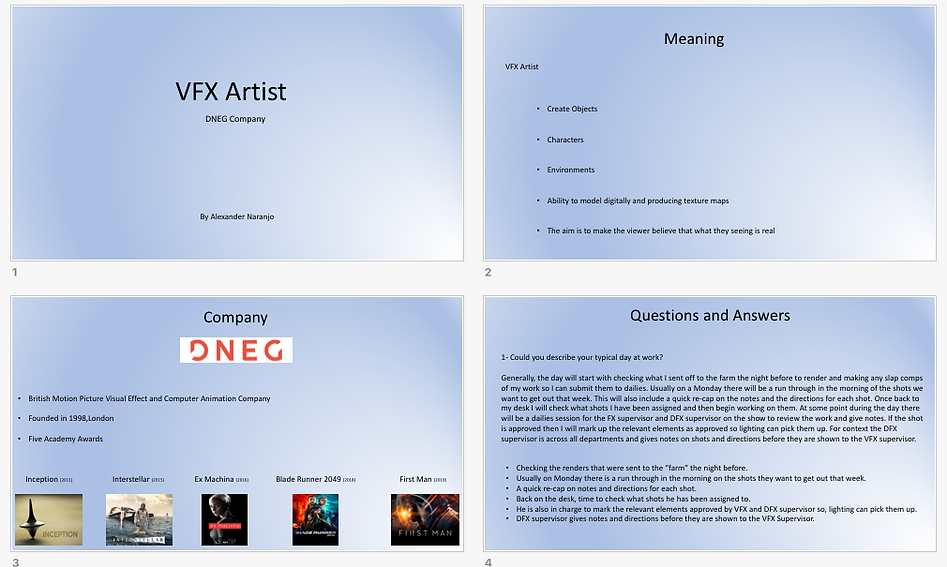
Patrick, who works at DNEG Motion Picture Company, described his typical day at work as each day is not the same. Usually, on Mondays, Patrick checks the renders that were sent to the “farm” the night before, after that, there is a run through with the team on the shots they want to get out that week and a quick re-cap on notes and directions for each shot.
Back on his deck, Patrick can check what shots he has been assigned to work with. His role also involved to mark the relevant elements approved by the supervisor so, the lighting department can pick them up.
-Any work experience in VFX before working in the industry?
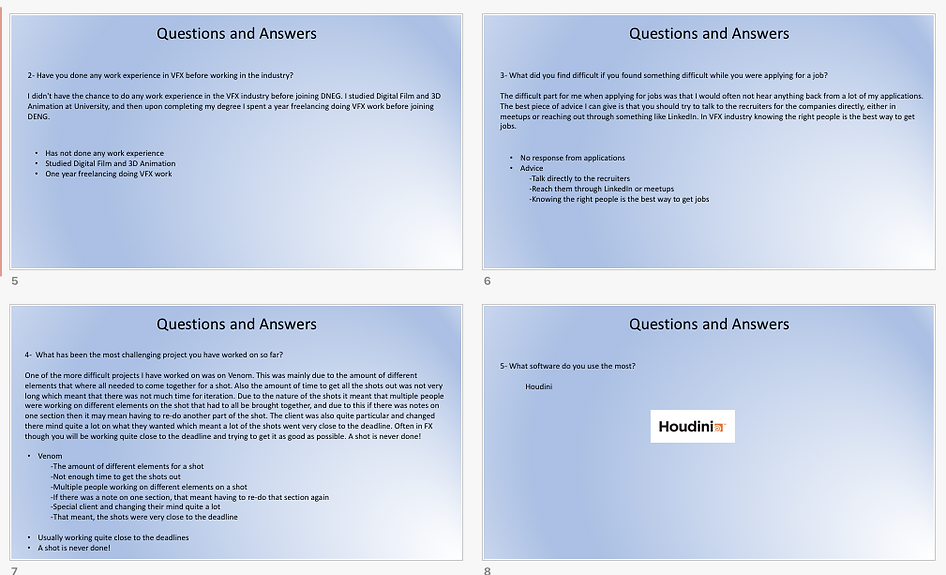
Patrick mentioned that he did not have the chance to do any work experience before joining DNEG, but after completing his degree in Digital Film and 3D Animation, he spent one year as a freelancer doing VFX work.
-What was difficult when applying for a job?
The difficult part when applying for jobs was that Patrick would often not hear anything back from the applications. But, the advice he said was; talk directly to the recruiters, reach them through LinkedIn as knowing the right people is the best way to get jobs.
-The most challenging project?
Venom film was the most difficult project Patrick have worked on so far because of the amount of different elements for a single shot and not enough time to get the shots out. He also said that multiple people worked on different elements on a shot, therefore if there was a note on any particular section on the shot, it meant to re-do it again.
-The inspiration that leads you to become a VFX artist?
At University, Patrick was not sure what role to choose. But in the third year, he decided to move towards VFX. The lecture Pietro Ponti was the key person in getting Patrick into the industry (DNEG).
-What did not meet your expectations in the industry?
Patrick mentioned that when he was a student, he would be working on a few things for a month, but now in the industry, he is capable to do potentially 2 to 3 shots a day. The thing that Patrick does not like much is the less creative input when working on a shot. And the fact that Supervisor or Director want a certain look for everything, which means to match what they like or want, sometimes it seems that VFX from one film is recycled onto another film.
-Advice to someone who would like to become a VFX artist?
Finally, the pieces of advice Patrick gave were; to start looking into some basic scripting in Python and vex for Houdini, learnt to work in the correct way, understand the whole shot and only focus at one part at the same time. Also, looking at other people’s work and keep updated as the industry is constantly moving and there is always something to learn.
Job Description:
Visual effects artist has the responsibility to create computer- generated (CG) animations and special effects for different visual platforms such as televisions, films, adverts, documentaries, exhibitions, etc. Visual effects involve the integration of live-action footage and generated imagery to create environments which look realistic. To achieve a believable realism in any video project, VFX artist uses the latest technology of 2D or 3D software’s, for example; Houdini, Maya, PhotoScan, Nuke or Zbrush.
Therefore, during post-production, VFX artist is in charged to create high quality visual within budgets, work close to deadlines, communicate with the team and VFX or DFX supervisor, take directions and feedback well from VFX supervisor and maintain an accurate summary of progress from the previous day’s work.
Most of the VFX companies prefer VFX artists who have a degree in graphic art or a similar field, as well as good communication skills, computer proficiency and an understanding of the technical aspects of video production, such as sound and lighting. Also, having more than one year of experience could potentially guarantee a place within any VFX company.
Being a VFX artist is a talent because creating something from nothing is considerate as “magic”. This could mean working long hours or moving abroad.
-Following a passion is not always easy... -
VFX Artist (CV & Cover Letter)
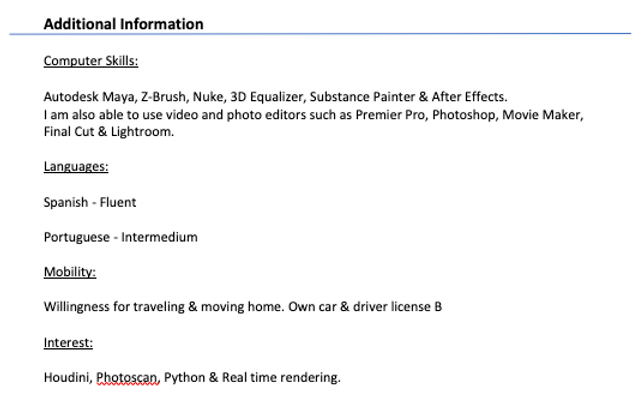
CV
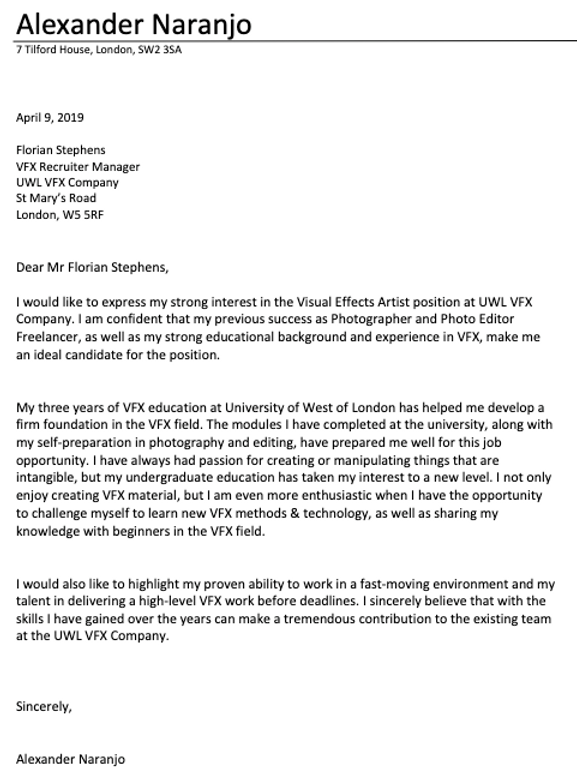
Cover Letter
2x High-Quality Prints
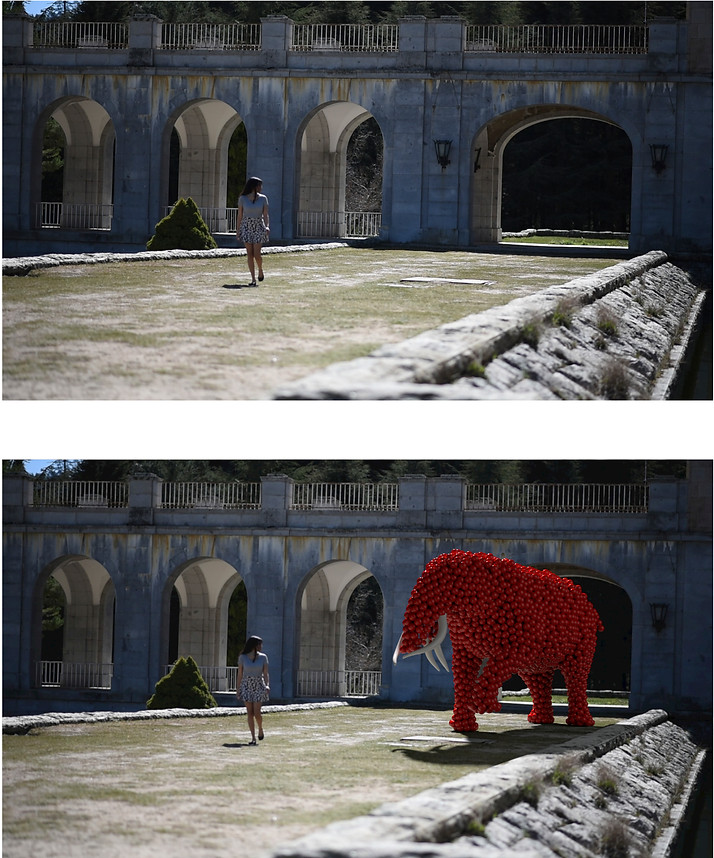
Elephant made in balls
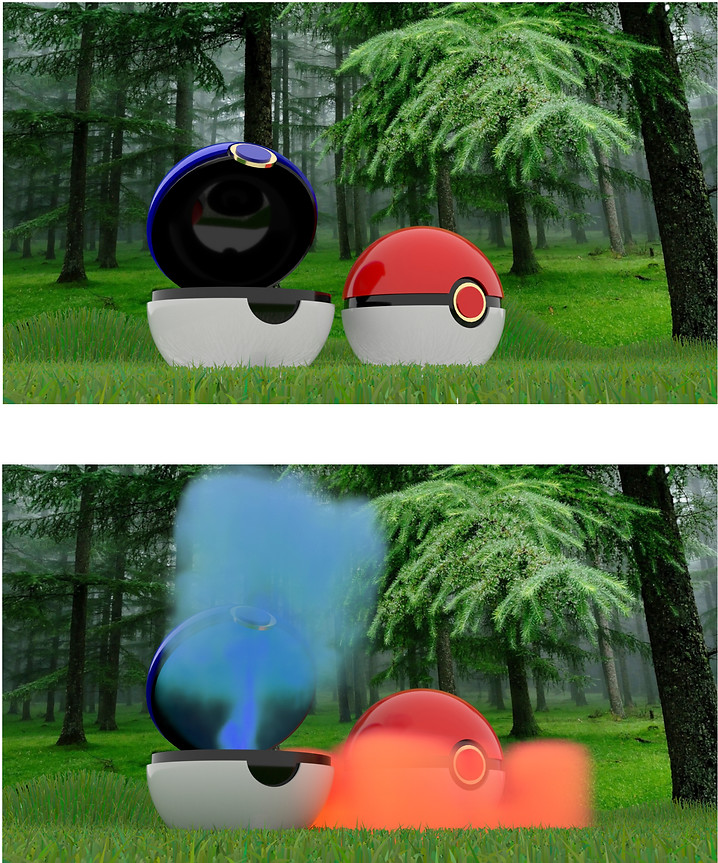
Pokeballs with smoke
Business Card

